

What is SEO
Introduction

In today’s digital world, every business and content creator wants their website to rank higher on Google. But how does that actually happen ? The answer is SEO – Search Engine Optimization.
SEO is a powerful strategy that helps your website appear in search results when people look for information online. Whether you’re a blogger, marketer, or business owner, understanding SEO is the first step toward driving free, organic traffic to your site . In the beginner’s guide, we’ll explore what SEO is why it matters, how it works, and the different types of SEO you need to know.
In this article, we will see topics related to SEO
- What is SEO ?
- Why is SEO Importance ?
- How Does SEO Work ?
- Type of SEO
- Key Benefits of SEO
What is SEO
SEO stands of Search Engine Optimization. It is the process of improving a website’s visibility on search engines like Google, Bing, Yahoo. When people search for something online, they usually click on the results shown on the first page, which brings more traffic ( visitors ) to your site.
SEO is all about understanding what people are searching for, creating useful content, and making sure search engines can easily find and understand your website.
Why is SEO Important
SEO is important because it helps your website get more visibility in search engines like Google. When your site appears on the first page of search results, more people can find and visit it.
- Here are the main reason why SEO matter
1. Increase Organic Traffic –
- SEO brings free, natural ( organic ) traffic to your website without running ads.
- SEO helps website rank higher in search engine results page ( SER Ps ) making them more visible to potential customers.
2. Builds Trust and Credibility –
- Website that rank higher on Google are seen as more trustworthy by users.
- Strong SEO practices build trust and credibility, which are essential for attracting and retaining customers.
3. Better User Experience –
- SEO improve the overall structure, speed, and mobile – friendliness of your site, which helps visitors stay longer.
- A positive user experience keeps visitors engaged, encourages them to explore the website further, and increases the likelihood of conversions.
4. Cost – Effective Marketing –
- Unlike paid ads, SEO gives long – term results without constant spending.
- SEO is a cost – effective marketing strategy compared to paid advertising.
5. Helps You Reach Your Target Audience –
- SEO helps attract people who are already searching for what you are already searching for what you offer, increasing your chances of getting customers.
6. Gives Long – Term Results –
- A well – optimized site can keep getting traffic for months or years.
- Once a website achieves high rankings it can maintain its visibility and attract organic traffic, without constant maintenance.
Conclusion –
In simple words, SEO helps your website grow by getting more visitors, building trust and reaching the right people – all without spending a lot of money & helps businesses achieve their marketing goals and grow their online presence.
How Does SEO Work
SEO works by helping search engines like Google understand your website so they can show it to people searching for relevant information.
Search engines use bots ( called crawlers ) to scan your website and collect data. Then, they index ( store ) your page and rank them based on how useful and relevant they are to a user’s search.
SEO Works Through These Key Steps –
1. Crawling – Search engines scan ( crawl ) your website and collect information from your website.
2. Indexing – After crawling, the pages are stored in a database ( index ) so they can be shown in search results.
3. Ranking – When someone searches something, Google chooses and ranks the most helpful and relevant pages using its algorithm.
SEO Helps Improve Ranking By –
- Using relevant keywords in your content .
- Creating high – quality, helpful content .
- Getting backlink from others websites .
- Making your site mobile – friendly and fast .
- Improving user experience .
In simple words, SEO works by making your website easy to understand for search engine and useful for visitors. This helps your site rank higher and get more traffic.
Type of SEO
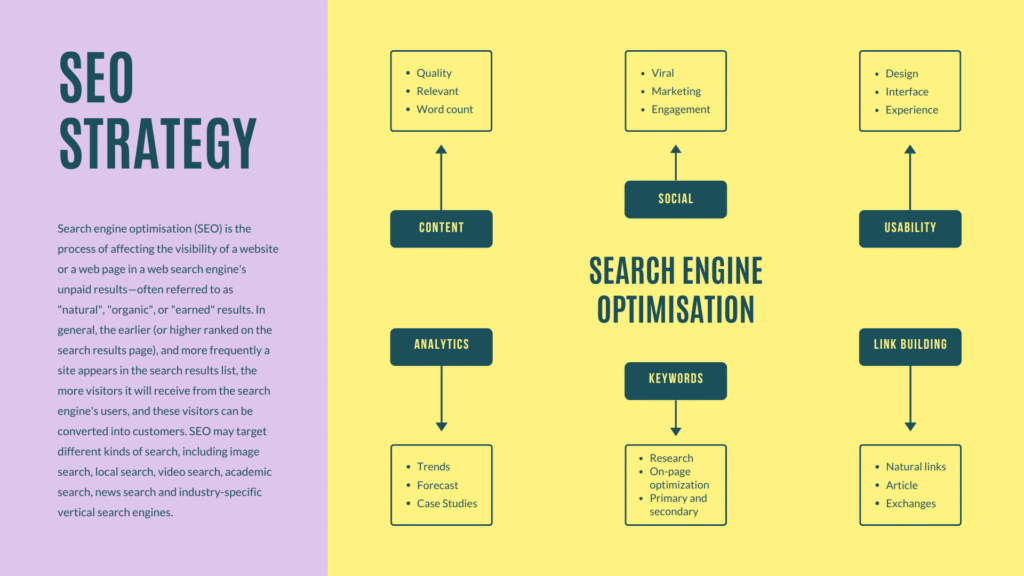
To rank better on search engine, SEO is divided into different types. Each type plays a unique role in improving your website’s performance and visibility.
1. On – Page SEO – On – page SEO means optimizing the content and elements within your website pages.
- Using the right keywords
- Writing high – quality content
- Adding title tags and meta descriptions
- Optimizing images
- Using internal linking
- Having a clean URL structure
Goal – Make content relevant and useful for both users and search engine .
2. Off – Page SEO – Off – page SEO refers to actions taken outside your website to improve its reputation and authority .
- Backlinks from other websites
- Social media sharing
- Guest posting
- Influencer outreach
Goal – Build trust and authority for your site .
3. Technical SEO – Technical SEO focuses on the backend structure of your website .
- Fast loading speed
- Mobile – friendliness
- SSL certificate ( HTTPS )
- Proper XML sitemaps
- Fixing crawl errors
Goal – Helps search engine crawl and index your site efficiently .
4. Local SEO ( Optional If Your Site Targets a Location ) – Local SEO is for businesses that want to rank in local search results, like – SEO expert near me .
- Creating and optimizing a Google my business profile
- Using local keywords
- Getting local reviews
Goal – Attract local customers searching nearby .
Other Related Types of SEO
1. White Hat SEO – Ethical methods that follow search engine guidelines .
2. Black Hat SEO – Unethical tricks that may lead to penalties .
3. Gray Hat SEO – Risky methods that are between white and black hat .
4. E- Commerce SEO – SEO for online store and product listings .
5. Mobile SEO – Optimizing websites for mobile devices .
6. Content SEO – Creating keyword – rich, helpful content to rank better .
7. International SEO – Optimizing websites to target users in different countries or languages .
Key Benefits of SEO
Search Engine Optimization ( SEO ) offers long-term and cost – effective advantages for any website or business . Here are the main benefits .
1. Increases Organic Traffic – SEO helps your website appear on top of search results, which brings more free and targeted visitors without paying for Ads .
2. Builds Trust and Credibility – Website that rank high are seen as more reliable and authoritative by users. SEO includes optimizing for site speed, mobile and secure browsing ( HTTPS ), which builds trust .
3. Better User Experience – SEO focuses on improving website structure, speed, mobile – friendliness, and easy navigation – all of which lead to a smooth user experience .
4. Cost – Effective Marketing – Unlike paid ads, SEO drives continuous traffic over time. Once ranked, you can get visitors without ongoing ad spend .
5. Higher Conversion Rates – SEO brings visitors who are already searching for your product or service, so they are more likely to take action ( like buying or signing up ).
6. Competitive Advantage – Website with better SEO outperform competitors in search ranking, visibility, and sales – especially in crowded niches .
7. Supports Long-Term Growth – Good SEO strategies build your sites presence gradually. Over time, this leads to stable and growing online success .
What is Internal Linking
Internal linking means linking one page of your website to another page within the same domain. These links helps both users and search engine navigate your website easily.
Example – If you’re writing a blog post on types of SEO and you have a separate article on white hat SEO, you can link it like this – ( learn more about – White hat SEO )
Why is Internal Linking Important –
1. Improves SEO Ranking – Google uses internal links to discover and index other pages of your website.
2. Distributes Page Authority – High – ranking pages can pass some of their value ( link juice ) to new or important pages.
3. Enhances User Experience – It keeps visitors engaged longer by guiding them to related content.
4. Reduces Bounce Rate – If users keep clicking to more pages, it lowers bounce rate – a good SEO signal.
Best Practices for Internal Linking –
- Use relevant anchor text (e.g., “read about mobile SEO ” not ” click here ” ).
- Link to related and helpful content only.
- Don’t overuse links – keep it natural.
- Update old post with links to your new articles.
- Use a clear site structure ( Home > category > post )
Conclusion –
SEO ( Search Engine Optimization ) is the backbone of online visibility. From understanding what SEO is, how it works, to exploring its types and key benefits – it’s clear that SEO is not just about rankings, but about building a strong, long-lasting presence on the internet.
Whether you’re a blogger, business owner, or digital marketer, using the right SEO strategies – like On-Page, Off- Page, Technical, Mobile, and Content SEO – can help you reach the right audience, grow traffic, and increase conversions.
And as you dive deeper, internal linking, ethical SEO practice ( like- White Hat SEO), and keeping up with Google’s algorithm updates will keep your site ahead in the competition.
In short, SEO is a long-term investment not a quick fix. The more you learn and apply, the better your online success will be.

Good 👍🏻